
The Changing Tide: Understanding Bullying in Malaysia
What the experts say…
Datuk Dr Zulkifli Ismail, Chairman, Positive Parenting Management Committee
“As we move into 2026, Malaysia has taken a monumental leap in child protection with the recent passing of the Anti-Bullying Bill 2025. For the first time, educational institutions are legally mandated to implement comprehensive anti-bullying guidelines. The Bill also establishes a dedicated Anti-Bullying Tribunal, empowering victims to seek justice and compensation. As a parent, understanding this shift is vital; the law now recognises that safeguarding our children is a shared responsibility between schools, the government, and the home.”
Dr Yen Teck Hoe, Consultant Psychiatrist
“Bullying in school occurs due to a complex mix of social, emotional, and environmental factors, often driven by a desire for power, control, or popularity. Common causes include insecurities in the bully, a lack of empathy, or a desire to emulate aggressive behaviour seen at home or online. Boys are more likely to experience physical bullying, while girls are more likely to experience psychological bullying.”
Defining the scourge: figures and forms
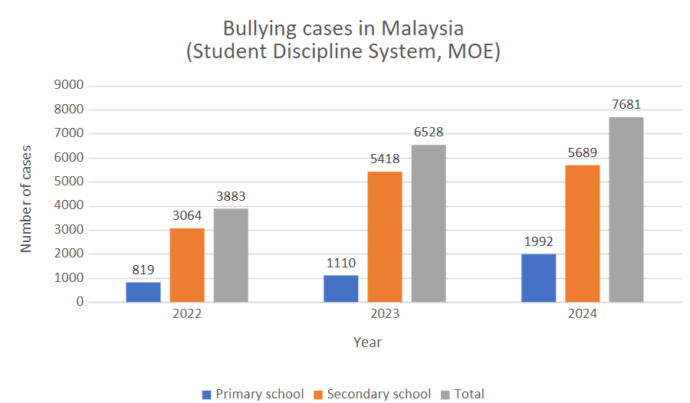
According to recent data from the Ministry of Education (MOE), there is a 17% increase of bullying cases in Malaysian schools from 2023 to 2024.
To protect our children, we must recognise the evolving forms of this behaviour:
- Verbal bullying: Still the most common form in Malaysia, involving name-calling, insults, and demeaning language.
- Cyberbullying: This includes “doxing” (exposing private info), shaming on TikTok or WhatsApp, and sending threatening messages.
- Physical bullying: Includes hitting, kicking, or damaging a child’s belongings.
- Social (relational) bullying: It includes spreading rumours or deliberate social exclusion from peer groups.
- Psychological bullying: Includes manipulation or intimidation that causes severe mental distress and anxiety.
The Hidden Scars: Understanding the Impact of Bullying
What the expert says…
Dr Yen Teck Hoe, Consultant Psychiatrist
“Bullying can have harmful and long-lasting consequences for children. Besides the physical effects of bullying, children may experience emotional and mental health problems, including depression and anxiety, that can lead to substance abuse and decreased performance in school. Meanwhile, unlike in-person bullying, cyberbullying can reach a victim anywhere, at any moment. It can cause profound harm, as it can quickly reach a wide audience and leave a permanent footprint online for all involved. Your child has the right to a safe, nurturing school environment that respects their dignity. All children have the right to an education, and protection from all forms of physical or mental violence, injury or abuse.”
The ripple effect: impact on growth
- Academic decline: Victims often experience a sharp drop in grades due to “cognitive interference” – the brain is too focused on survival to focus on algebra or history.
- Mental health struggles: Increased risk of chronic anxiety, clinical depression, and, in severe cases, suicidal ideation.
- Social withdrawal: A loss of trust in peers leads to isolation, making it difficult for the child to form healthy relationships later in life.
- Physical ailments: Stress often manifests as psychosomatic symptoms, including chronic headaches, stomach pains, and disrupted sleep patterns.
Red flags: how to detect the signs
- School avoidance: Making frequent excuses to stay home or “faking” illnesses on Sunday nights.
- Emotional volatility: Unexplained outbursts of anger, sudden tearfulness, or becoming unusually clingy or quiet.
- Physical evidence: Unexplained bruises, torn clothing, or lost belongings and lunch money.
- Digital distress: If your child appears visibly upset, nervous, or secretive after using their phone or laptop.
- Changes in habits: Sudden loss of appetite or a significant shift in sleeping patterns, including frequent nightmares.
Taking Action: A Roadmap for Parents
What the expert says…
Cikgu Najwa Abd Halim, School Counsellor
“With the Anti-Bullying Bill 2025, parents in Malaysia have a clearer legal path, but the emotional journey remains complex. Whether your child is the one coming home in tears or the one being called into the principal’s office, your reaction is the most critical factor in their recovery. We must move away from blame and toward constructive intervention. As parents, we are our children’s primary teachers of empathy and resilience. Addressing bullying is not about winning a fight; it is about restoring safety and teaching accountability in an increasingly digital and social world.”
If your child is the victim: support and advocacy
- Listen without judgment: Allow them to tell the full story without interrupting or blaming them for not “fighting back.”
- Document everything: Keep a log of incidents, screenshots of cyberbullying, and physical evidence to present to the school or the Anti-Bullying Tribunal.
- Contact the school formally: Schedule a meeting with the administration to discuss their specific anti-bullying policy and safety plan.
- Seek counselling: Professional support can help your child process trauma and rebuild shattered self-esteem.
If your child is the perpetrator: accountability and change
- Stay calm but firm: Address the behaviour directly. Ensure your child understands that bullying is a violation of the law and school policy.
- Identify the “why”: Bullying is often a symptom of underlying stress, a need for control, or peer pressure. Address the root cause.
- Enforce meaningful consequences: This may include loss of digital privileges or making direct amends (an apology or restitution) to the victim.
- Foster empathy: Engage in discussions about the impact of their actions and model respectful behaviour at home to reset their social compass.
- Don’t be a bully yourself: When receiving a report from the school, accept responsibility and take necessary steps to address the matter. Don’t be defensive of your child’s wrongdoings, or worse, going as far as attacking teachers personally.
It Takes a Village: A Unified Front Against Bullying
The psychiatrist’s view: building emotional fortitude
Dr Yen Teck Hoe, Consultant Psychiatrist
“Prevention begins with nurturing a child’s internal world. The first step to keeping your child safe, whether in-person or online, is making sure they know the issue.”
- Educate your children about bullying: Once they know what bullying is, your children will be able to identify it more easily, whether it is happening to them or someone else.
- Talk openly and frequently to your children: Check in with your children daily, inquiring not only about their classes and activities, but also about their feelings.
- Help your child be a positive role model: There are three parties to bullying: the victim, the perpetrator, and the bystander. Even if children are not victims of bullying, they can prevent it by being inclusive, respectful, and kind to their peers. If they witness bullying, they can stick up for the victim, offer support, and question bullying behaviours.
- Help build your child’s self-confidence: Encourage your child to enrol in classes or join activities they love in your community. This will help them build confidence and connect with a group of friends with shared interests.
The counsellor’s view: structural prevention
Cikgu Najwa Abd Halim, School Counsellor
“In the school environment, prevention is about visibility and clear boundaries. Since the new legislation, counsellors are now the bridge between student safety and academic success.”
- Implement “upstander” training: Shift the focus from the bully-victim duo to the bystanders, empowering them to intervene safely or report discreetly.
- Data-driven monitoring: Use incident reporting trends to identify “hot spots” like corridors or playgrounds during recess for increased supervision.
- Peer mediation programmes: Train older students to mentor younger ones, creating a vertical culture of protection and mentorship.
- Regular awareness workshops: Conduct monthly sessions for both parents and students on the legal definitions and consequences of bullying under Malaysian law.
The overview: a collective responsibility
Datuk Dr Zulkifli Ismail, Chairman, Positive Parenting Management Committee
“Bullying does not stay within school gates; it is a reflection of the environment we create as adults. A community that tolerates aggression will produce aggressive children.”
- Model respectful behaviour: Children mirror the adults in their lives. Practice kindness in your interactions with service workers, neighbours, and online.
- Monitor digital environments: Communities must promote responsible social media use, as cyberbullying often originates in unsupervised group chats.
- Support local legislation: Stay informed about the Anti-Bullying Tribunal proceedings to understand how the law protects our local youth.
- Encourage inclusive activities: Support local sports and arts programmes that emphasise teamwork over individual dominance, fostering a sense of belonging for all.