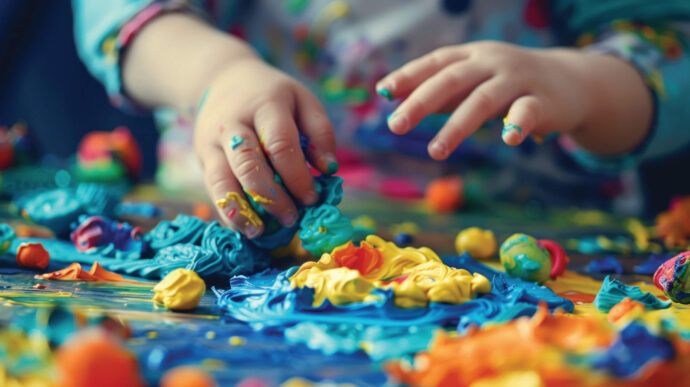
Sensory play is more than just fun and games. It’s the feel of wet sand squishing between their fingers at the beach, the vibrant colours of a homemade “rainbow” from dyed rice, or the fragrant aroma of bunga kantan and lemongrass in a pretend masak-masak session. These hands-on experiences allow children to explore, experiment, and make sense of the world.
It includes any type of play that stimulates the senses – touch, sight, hearing, smell and taste. It also incorporates the often-overlooked senses of balance (vestibular) and body awareness (proprioception), crucial for physical development and coordination. In essence, it’s a child’s natural way of understanding their surroundings.
By engaging their senses, children are not just playing, they are also building neural pathways. These early interactions support cognitive growth, information processing, problem-solving skills, and a strong foundation for future learning.
Sensory play: how play can be beneficial
From boosting brain power to building social skills, sensory play offers a world of benefits that go far beyond the playroom. These include:
- Cognitive development: Sensory play builds neural pathways. Problem-solving activities like pouring water into a container or building with blocks foster critical thinking, focus, and memory.
- Fine and gross motor skills: Manipulating playdough or tweezers develops fine motor control; jumping or climbing strengthens gross motor skills for coordination and balance.
- Language development: Exploring textures teaches descriptive words like “smooth” or “sticky”, enriching communication. Talking about actions and observations leads to conversation.
- Social and emotional development: Sensory play can calm children and help them self-regulate. Playing together teaches sharing, taking turns, and empathy.
- Sensory integration: Regular sensory play helps children process and organise sensory input, filtering distractions so they can focus.
- Calming effect: Activities can reduce anxiety and frustration.
Try these sensory play ideas!
The best sensory activities use simple, everyday items. Here are some ideas:
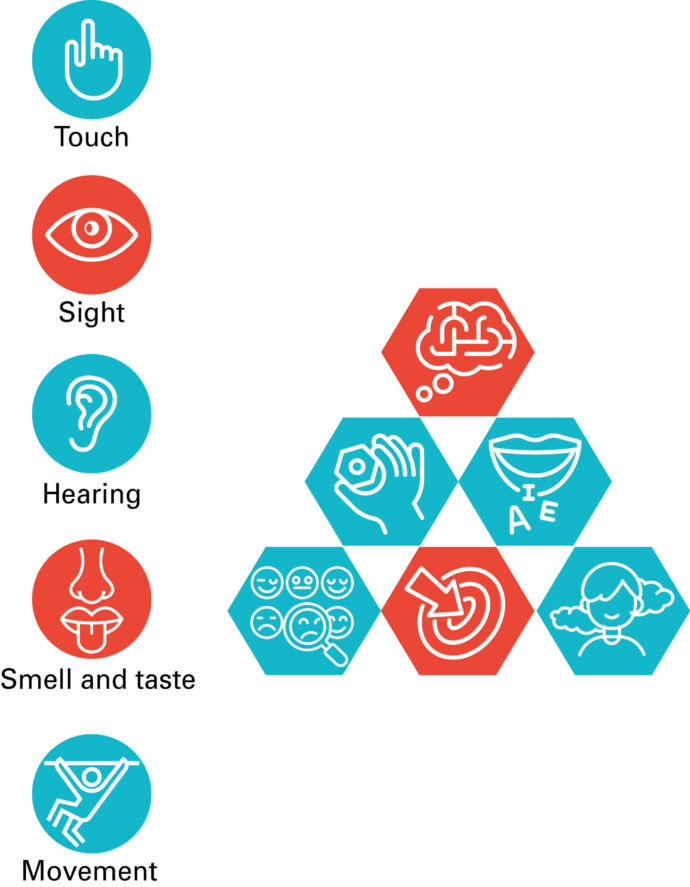
- Touch: Activities for touch can include playing with materials such as playdough, slime, or kinetic sand, as well as fun games like finger painting. They can also explore different textures, sizes, and weights using a sensory bin filled with rice, pasta, or beans, or playing with wooden blocks and stackers.
- Sight: Parents can use colourful picture books or flashcards, or sort objects by their colour and size. Watching bubbles float and pop during bath time is also a great way to stimulate sight.
- Hearing: Try playing with homemade or store-bought musical instruments, singing songs and nursery rhymes, or listening to the sounds of nature during a walk.
- Smell and taste: Activities for smell and taste involve taste-testing a variety of foods with different flavours – like sweet, sour, and salty – and smelling flowers or herbs from a garden.
- Movement (balance and body awareness): Playing in the playground, swinging, jumping and rolling – all can stimulate their senses of movement, balance, and body awareness.



Sensory play isn’t just a way to pass the time – it’s a vital part of childhood that sparks curiosity, builds essential life skills, and helps children feel more confident in the world around them. By weaving simple, sensory-rich experiences into everyday life, parents can turn ordinary moments into powerful opportunities for learning, growth, and joy.