
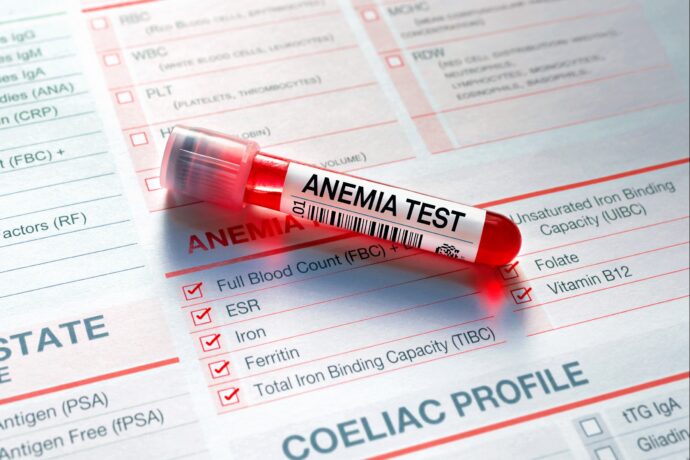
Iron is an essential mineral that performs various functions in the body. A lack of iron in the body can lead to iron-deficiency anaemia.
Functions of iron
- An important component of haemoglobin in red blood cells, which carries oxygen throughout the body
- Vital for healthy growth and development during childhood
- Supports a fully- functioning immune system
- Ensures normal production and function of various cells and hormones
- Maintains healthy skin, hair, and nails
Iron-deficiency anaemia is one of the most common nutritional deficiencies in the world.

Common symptoms
90% of cases are asymptomatic. The following symptoms occur mainly in moderate to severe anaemia.
- Extreme fatigue
- Weakness
- Pale skin
- Shortness of breath, rapid heartbeat, or chest pain
- Headaches
- Poor appetite
- Tinnitus (hearing ringing noises inside the head)
- Pica (a craving for non-nutritive substances, e.g. ice, clay, paper)
- Brittle nails or hair loss
- Sore tongue
Possible causes
- A lack of iron in diet
- Pregnancy
- Blood loss due to:
- Heavy periods
- Gastrointestinal conditions, e.g. ulcerative colitis, Crohn’s disease
- Malabsorption due to:
- Coeliac disease
- Bariatric surgery
Potential complications
- Growth or developmental problems in children
- Heart problems, e.g. rapid heartbeat, enlarged heart, heart failure
- Pregnancy complications,e.g. premature births, low birth weight
How to prevent iron deficiency?
- Ensure sufficient intake of iron-rich foods
- Red meat and poultry
- Seafood
- Dark green leafy vegetables, such as spinach
- Beans, peas, and lentils
- Dried fruit, such as raisins and apricots
- Iron-fortified cereals, breads and pastas
- Include foods containing vitamin C during mealtimes to enhance iron absorption
- Oranges
- Grapefruit
- Strawberries
- Tomatoes
- Broccoli
- Peppers
- Control intake of foods with high levels of phytic acid and calcium during mealtimes, which can affect iron absorption
- Wholegrain cereals
- Seeds and legumes
- Milk and dairy
- Feed babies breastmilk or iron-fortified formula in the first year
- At 6 months, start complementary feeding and include iron-fortified cereal or pureed meat at least twice a day
Iron deficiency is a serious issue, especially among high-risk groups, such as young children and pregnant women. In fact, screening for children below 5 years should be introduced at maternal child health clinic; don’t wait for symptoms to appear.However, if you notice any symptoms of iron-deficiency anaemia in your children or other family members, immediately consult a healthcare professional for a proper diagnosis and treatment.
References
https://ova.galencentre.org/experts-unite-to-combat-iron-deficiency-anaemia-among-children/
https://www.webmd.com/vitamins-and-supplements/understand-iron-role-body
https://nutritionsource.hsph.harvard.edu/iron/
https://www.nhs.uk/conditions/iron-deficiency-anaemia/
https://my.clevelandclinic.org/health/diseases/22824-iron-deficiency-anemia
https://www.mayoclinic.org/diseases-conditions/iron-deficiency-anemia/symptoms-causes/syc-20355034