
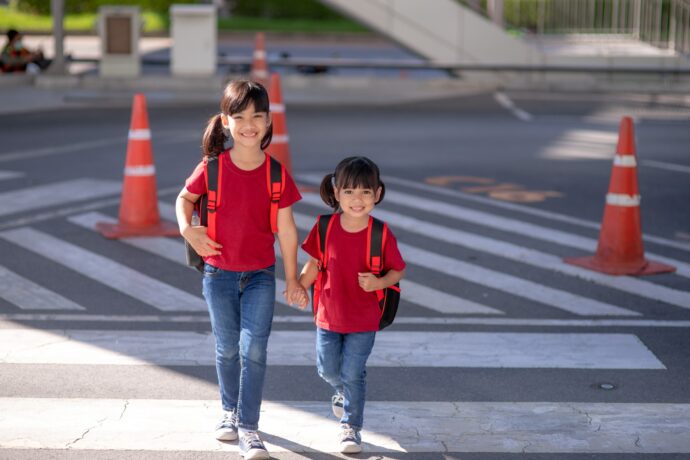
Instilling good safety habits in children is essential because streets can be unpredictable, with potential dangers such as traffic, strangers, and various hazards. Teaching children to be aware of their surroundings and to think quickly can reduce the risk of accidents and help ensure their safety in challenging situations. Here are some tips to teach your kids.

Good street safety habits
- Hold hands in busy areas: Reinforce holding hands with an adult when near roads.
- Use pedestrian crossings and overpasses: Teach children to always look both ways and wait for the green light or use the overpass instead of jaywalking.
- Stay on the curb or pedestrian pavement: Encourage walking away from the edge of the road.
- Avoid distractions: No texting, headphones, or toys when crossing streets.
- Walk with a buddy: Whenever possible, walk with a friend or group of people to feel safer.
- Never cross the road in front of a stationary vehicle: For example, after alighting from a bus as the bus driver may not see the child.
Recognising dangers
- Strangers: Teach your child to avoid speaking to strangers or accepting gifts.
- Blind spots: Explain how cars and buses may not see them when reversing or turning.
- Unsafe shortcuts: Guide them to stick to well-lit, busy streets and avoid isolated paths.
Responding to emergencies
- Memorise contact information: Ensure your child knows your name and your spouse’s name, phone numbers, and address.
- What to do if lost: Advise them to stay in one place and ask a shopkeeper or security guard for help.
- Road accidents: Teach them to move to a safe spot and call for help.
Parent’s role
- Lead by example: Follow road safety rules so your child can emulate you.
- Practice makes perfect: Role-play street scenarios to reinforce learning.
- Equip them for independence: Gradually let your child practise crossing smaller roads while you supervise.