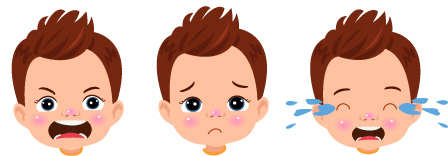

Tantrums are outbursts of anger and frustration commonly seen in children between one and three years. They happen when young children are upset but do not have words to communicate their feelings. During a tantrum, a child may scream, cry loudly, stiffen the body, move the arms, kick, push, throw objects, lie on the floor, or have breath- holding episodes.
Tantrums are a normal phase of growing up as children encounter new and unfamiliar experiences. It is important to remember that toddlers do not have tantrums on purpose to annoy their parents. They need guidance and support to learn how to manage strong emotions.
A tantrum could happen when a child does not get what they wish for, e.g. another child takes the toy that they want. Children are more likely to have tantrums when they are hungry, tired, or feeling unwell. Overstimulation of the senses with too much sound, lights, or being in a crowded environment for a prolonged period can also trigger tantrums.
Here are some tips on how to cope and support toddlers through this phase:
- Establish routines, rules and limits
Having regular routines helps children know and accept that activities they enjoy and those they dislike are part of every day. Have clear, simple, and reasonable rules and limits about what is allowed and not allowed. It will take them a while to learn, so be consistent. Praise them when they remember. And remind them gently when they forget. - Be a good role model
Children learn best by imitating the behaviour of adults around them. Set a good example by displaying polite, kind, and gentle behaviour that you want them to follow. If they regularly see you shouting and behaving rudely when you are upset or angry, they will imitate this behaviour. - Help children recognise their emotions
As your child grows, keep using words like “happy”, “sad”, “hungry”, “pain”, “tired” when you see them go through these experiences. This helps them to recognise different emotions, connect them with words, and improve their ability to communicate. - Prevent and manage triggers
Young children need regular breaks. Make sure your child has rested and had something to eat before going out. Pay attention to these needs when there is a change of routine, e.g. during trips or gatherings. Respond to signals showing they are hungry, sleepy, bored, or feeling unwell. Be ready to leave early or take your child out for a break before they become upset. - Redirect
Your child may be too young to understand why you may have to say “no” to something that is unsuitable or unsafe. When you say “no”, be ready to shift their attention to something else that is interesting or offer an alternative. For example, if your child wants to play with a knife, say “This isn’t safe to play with, but let’s get your blocks instead.” - Stay calm and patient
If your child throws a tantrum, stay calm and try to help them calm down. Offer comfort by holding your child gently. If necessary, carry your child to a quiet, safe place. Speak softly and acknowledge that they are upset. Allow your child to calm down gradually. When they have settled down, give them a hug. A drink, snack, or nap may help them feel better too. - Communicate with your child
Once your child is in a better mood, ask what made them upset. Listen to their thoughts and teach them how to ask politely instead of shouting. Explain that some things they request may not be possible and ask them to suggest an alternative. For example, ask them “You can’t watch a movie tonight, but what would you like to do after dinner?” - Teach your child about consequences
Let your child know that there will be consequences to their behaviour. These have to be consistent and immediate to help them learn. For example, if they refuse to tidy up, explain that their toys will be put away for the rest of the day. Make sure that you follow through, gently but firmly.
Tantrums: do’s and don’ts
| Do’s | Don’ts |
|---|---|
|
|