
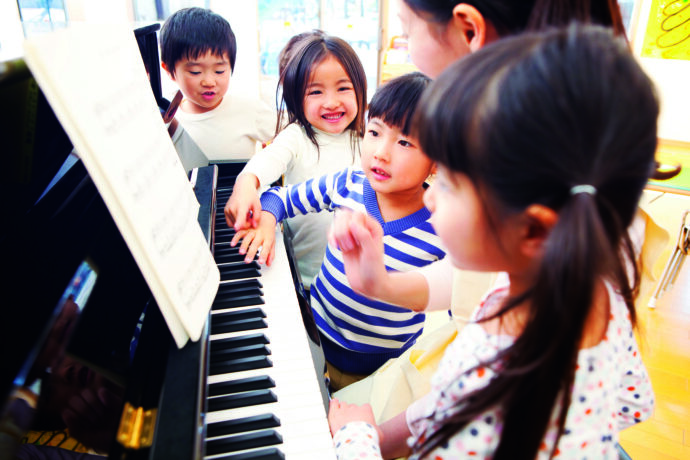
Music and arts are more than just entertainment; they are great tools that can significantly boost a child’s cognitive development. Engaging with these creative mediums fosters critical thinking, problem- solving skills, and emotional intelligence, laying a strong foundation for academic and personal success.
Cognitive benefits
- Enhanced brain development: Music and arts stimulate multiple areas of the brain, strengthening neural connections and improving cognitive function. Learning an instrument, for example, enhances memory, attention, and mental flexibility.
- Improved language skills: Music is a language in itself. Children who engage with music develop a better understanding of rhythm, pitch, and melody, which can translate into improved pronunciation, reading, and writing skills.
- Enhanced creativity and imagination: Music and arts provide a platform for children to express themselves freely, fostering their imaginations and encouraging them to think outside the box.
- Sharpened problem-solving skills: Whether it’s composing a piece of music or creating a work of art, children are constantly faced with challenges that require them to think creatively and find solutions.
Benefits beyond the classroom
- Increased confidence and self-esteem: Engaging in music and arts provides children with a sense of accomplishment and boosts their self-confidence.
- Improved social skills: Group music and art activities encourage teamwork, collaboration, and communication.
- Emotional regulation: Music and art can be a powerful outlet for children to express their emotions, helping them develop emotional intelligence and coping mechanisms.

Ways to incorporate music and arts into your child’s life
- Early childhood education: Integrate music and art into your child’s daily routines from a young age. Sing songs and play simple instruments together and let them have the opportunity to explore and play with paints, colour pencils, clay, or other items that can be used to express art and creativity.
- Formal music and art education: Enrol your child in music lessons, art classes, or after-school programmes.
- Family activities: Make music and art a part of family life. Sing songs together, play instruments, visit museums and galleries, go to live performances, and create art projects at home. Discuss these experiences and use it as a basis to explore and introduce other new creative outlets.
- Technology integration: Utilise educational apps and online resources that incorporate music and art into learning. Although we don’t advice excessive screen-time exposure, judicious use of technology – with parental input and oversight – can introduce children to exciting new ideas and open their minds to new experiences and ideas.
In conclusion, music and arts are invaluable tools for nurturing well-rounded individuals. By incorporating these creative mediums into your child’s education and daily life, we can foster cognitive development, ignite a lifelong passion for learning, and empower children to reach their full potential.
References
- https://today.usc.edu/does-learning-art-dance-and-music-boost-young-brains/
- https://kids.frontiersin.org/articles/10.3389/frym.2023.1151914
- https://pmc.ncbi.nlm.nih.gov/articles/PMC3957486/
- https://magazine.hms.harvard.edu/articles/how-music-resonates-brain
- https://news.harvard.edu/gazette/story/2019/11/new-harvard-study-establishes-music-is-universal/
- https://pmc.ncbi.nlm.nih.gov/articles/PMC10216937/
- https://cls.ucl.ac.uk/taking-part-in-the-arts-could-help-build-childrens-self-esteem-new-study-finds/
- https://philea.eu/opinions/the-power-of-participation-and-collaboration-in-arts-and-culture/
- https://www.childrenssociety.org.uk/what-we-do/blogs/the-magic-of-music-on-childrens-emotional-wellbeing